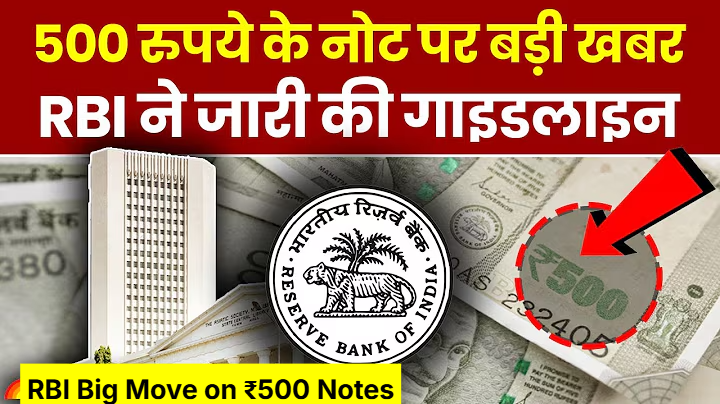
RBI Big Move on ₹500 Notes : The Reserve Bank of India (RBI) has announced a major decision regarding ₹500 currency notes. This update is crucial for every citizen, as ₹500 is one of the most commonly used denominations in daily transactions. According to the latest announcement, RBI has officially banned certain old-series ₹500 notes, declaring them no longer valid for circulation.
This step has been taken to curb counterfeit currency, strengthen the banking system, and modernize the security features of Indian currency.
Which ₹500 Notes Are Now Banned?
RBI clarified that old-design ₹500 notes issued before the 2016 Mahatma Gandhi New Series have been completely withdrawn. These notes lacked advanced security features and were most frequently counterfeited.
Key Points:
-
Old-series ₹500 notes are no longer legal tender.
-
The new Mahatma Gandhi New Series ₹500 note remains valid and fully in circulation.
-
Banks must collect and destroy the discontinued notes as per RBI guidelines.
Why Did RBI Take This Decision?
RBI stated that the old ₹500 notes had weak security features, making them easy targets for counterfeiters. Fake currency networks across the country were misusing these old designs to circulate forged notes, causing financial harm to citizens and businesses.
Additionally, India’s rapid shift toward digital payments and secure currency standards created a need for a more reliable system.

Major Reasons Behind the Ban:
-
To eliminate counterfeit currency
-
To strengthen the security of India’s financial system
-
To prevent economic loss caused by fake notes
-
To promote secure and digital transactions
Can the Old ₹500 Notes Still Be Exchanged?
Yes, but only for a limited time. RBI has instructed banks to accept old ₹500 notes within a specific exchange window. After the deadline, the notes will hold no monetary value.
Exchange Rules:
-
Old notes can be exchanged only at bank branches
-
A valid identity proof is required at the time of exchange

-
Once the exchange window closes, no claim will be entertained
How Will This Affect the Public?
Since ₹500 notes are widely used, many people may experience inconvenience if they still possess old notes. However, in the long run, the decision will benefit the entire country by ensuring safer and more reliable currency usage.
Impact on Common Citizens:
-
Individuals holding old notes must visit their bank immediately
-
Risk of counterfeit currency circulation will reduce
-
Transactions will become more transparent
-
Digital payments will grow further
New ₹500 Note – Features & Security Enhancements
The new ₹500 note introduced in 2016 under the Mahatma Gandhi New Series comes with multiple security advancements to prevent duplication and counterfeiting.

Key Features:
-
Fresh and modern design
-
Stronger security thread
-
Watermark with enhanced clarity
-
Micro lettering for security
-
Intaglio printing for texture
-
Colour-shifting ink
-
Better recognition through machines and scanners

What Instructions Has RBI Given to Banks?
To ensure a smooth withdrawal of the old notes, RBI has issued strict guidelines to all public and private banks.
Bank Guidelines Include:
-
Collect and seal old notes immediately
-
Do not issue old notes to customers
-
Educate staff to recognize counterfeit currency
-
Forward withdrawn notes to RBI-authorized centers
How Will This Decision Impact India’s Economy?
Economists believe that withdrawing old ₹500 notes will have a positive long-term effect on India’s financial ecosystem.
Expected Benefits:
-
Reduction in counterfeit currency

-
More transparency in cash transactions
-
Strengthening of the digital economy
-
Reduction in corruption, black money, and illegal cash circulation
Conclusion
RBI’s decision to ban old ₹500 notes marks an important step toward securing India’s currency system. Citizens who still have old notes must act quickly and exchange them at their nearest bank.
The new ₹500 notes are far more secure, technologically advanced, and equipped with features that make counterfeiting nearly impossible.
This move will not only protect consumers but will also strengthen India’s financial structure in the coming years.